

Our client, a leading insurer in Asia, set out to build an AI-powered care companion that supports customers across their whole health journey: from everyday wellbeing and health questions, through critical illness, to recovery after treatment. Customers could upload medical reports, have them explained in plain language, and be guided to the right care.
The platform had to be headless, so one core could run on the messaging apps each market already uses, as well as in the insurer's own apps. Each market brought its own regulations, healthcare systems and customer needs, starting with two markets in North and Southeast Asia.
PSYKHE joined to answer a practical question: how might we turn an ambitious vision into a service that two very different markets could deliver at the same time?
Working alongside the client's product, delivery and solution architecture teams, PSYKHE took the platform from vision to build-ready design across two markets.
Reframe
We started from an early-stage concept and refined it into a realistic MVP for both markets. That meant designing within regulatory, medical and compliance requirements from the outset, rather than retrofitting them later.
Blueprint
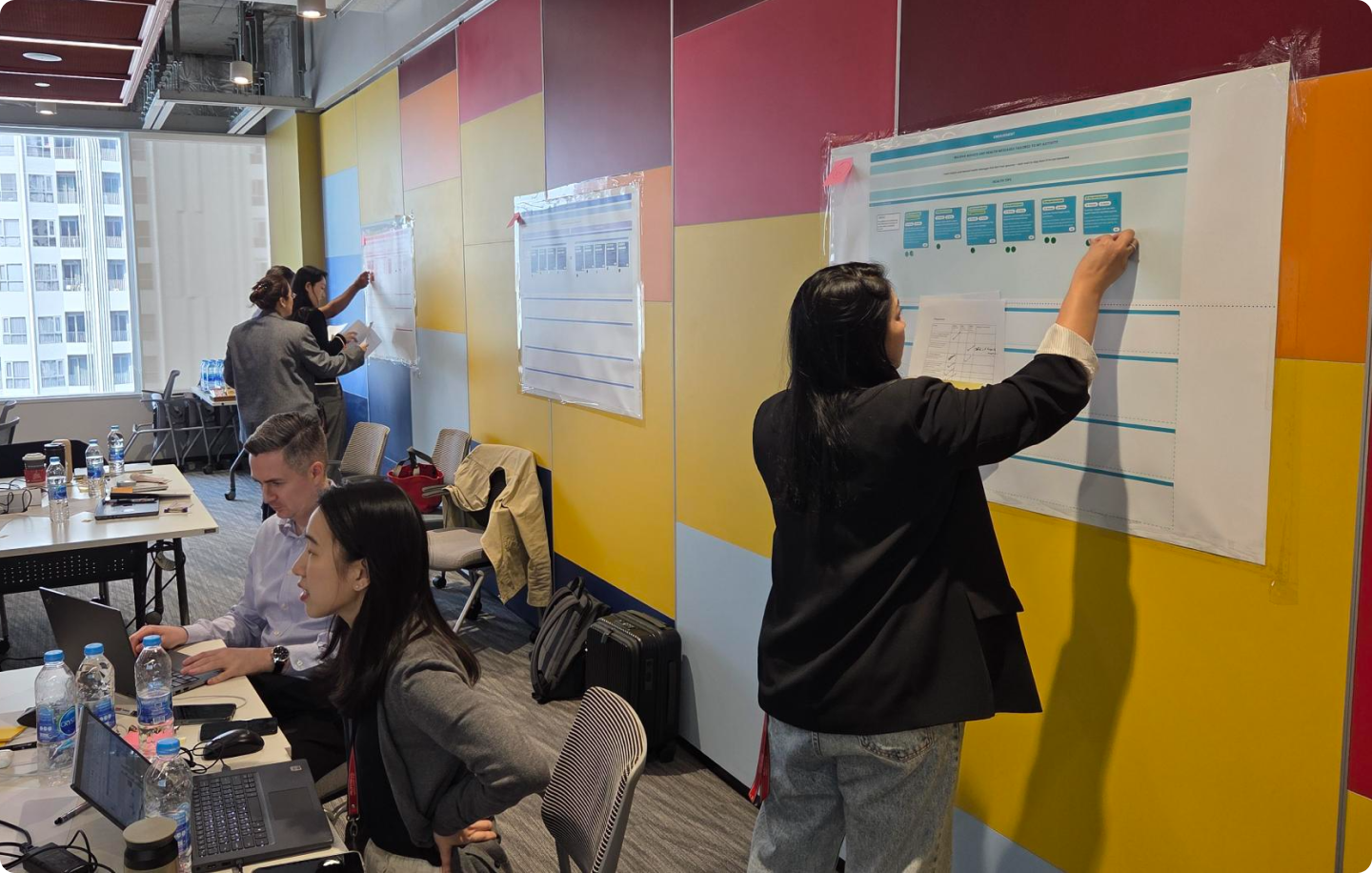
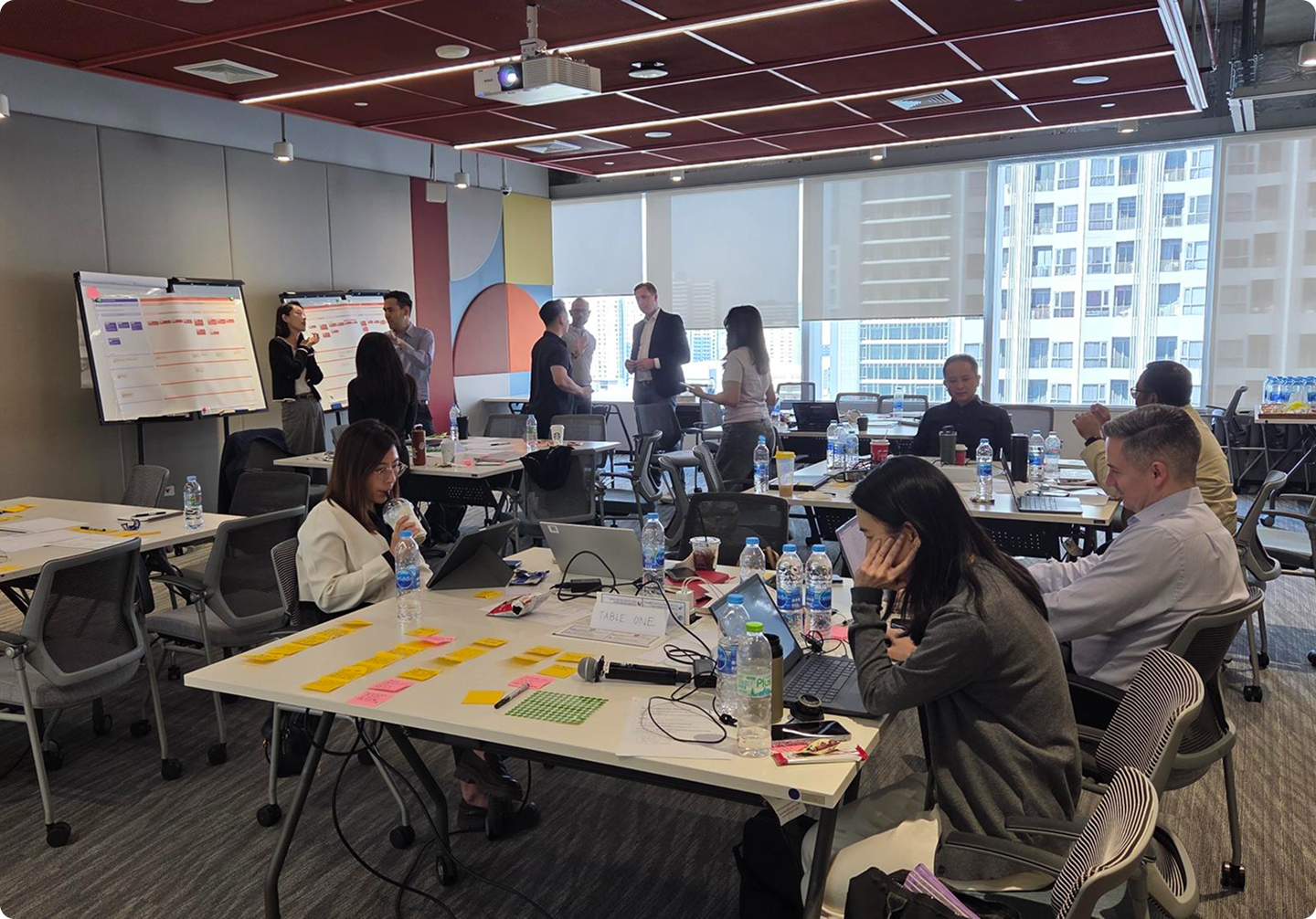
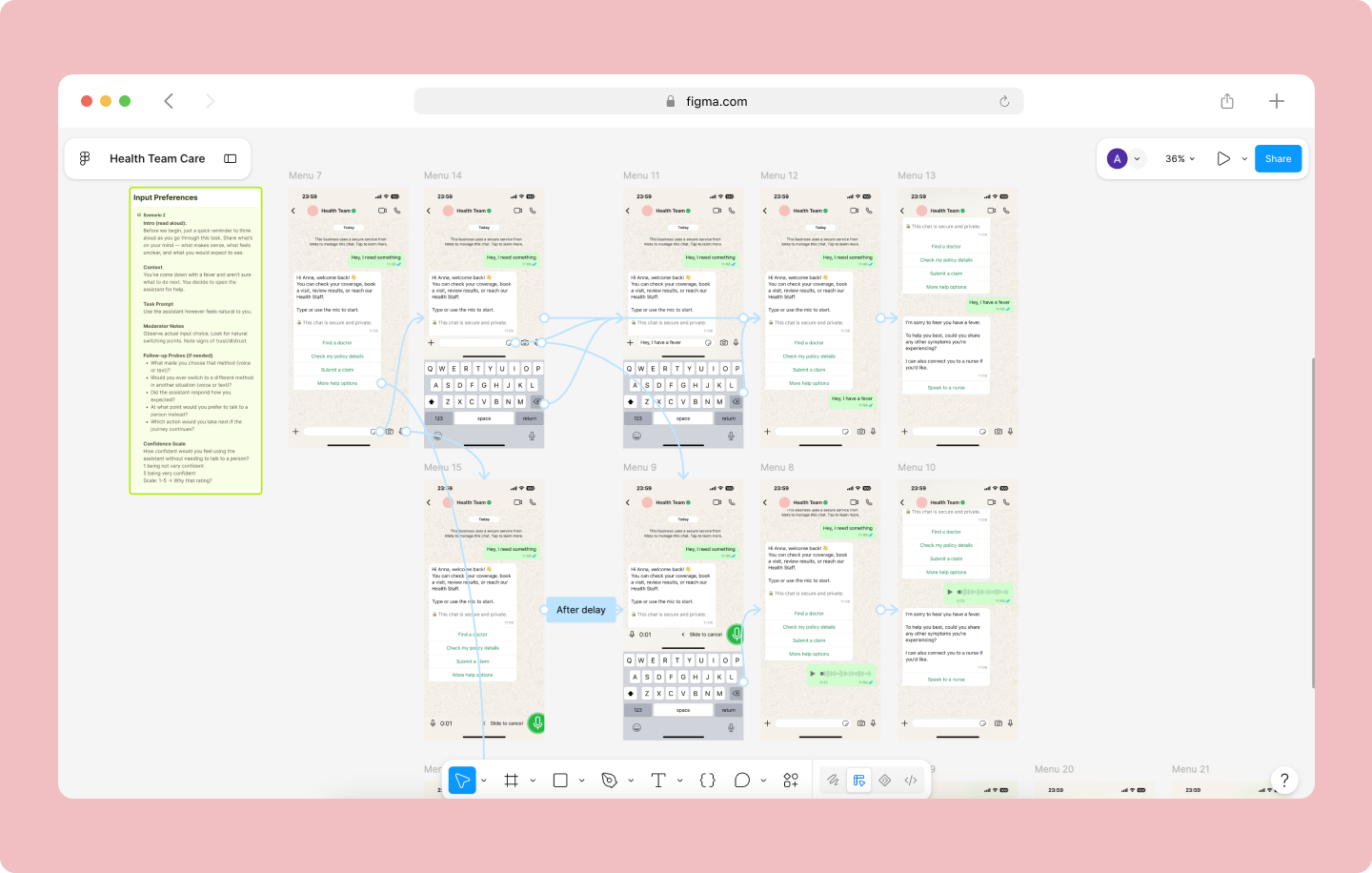
We mapped end-to-end service blueprints across eight journey stages, from onboarding and health enquiries to specialist appointments, pre-authorisation, treatment and post-treatment support. Every happy path was paired with rainy-day flows covering:
Validate
We concept tested prototypes with customers in four markets across Asia, recruited with the client's user research team, to check the direction before build.
Modularise
The two markets needed very different journeys. One called for a broad journey, open to non-customers for health enquiries and appointment booking. The other began with a focused women's health journey before widening its scope. By identifying the touchpoints both shared, we modularised components so two markets could be designed and built in parallel. We then defined logic flows and acceptance criteria with the delivery teams.
.
PSYKHE gave the platform one modular foundation for two markets with very different needs, so new journeys and markets could reuse what was already designed rather than start again. Customers across four markets responded positively to the concept in testing, and the service is now being prepared for launch in its first market.
Take a sneak-peek into some of our conversation-shaping insights:
Scale has to be designed from day one
Journeys that looked different, shared many of the same touchpoints. Designing them as modular components reduce design and build effort across markets.
Infrastructure, not interface, sets the pace
Where hospitals and clinics lack standard ways to share data, partnerships decide what a digital health service can do, not screens.
Each market needs its own starting point
In one market, women often delay seeking treatment for serious illness, so the first journey focused on women's health. The other market needed breadth from day one.
AI needs a human safety net
In health, a customer should never be left stuck with a bot. A human concierge steps in whenever the AI is unsure or a conversation turns sensitive