

To position themselves as the preferred banking partner in Asia, a regional bank sought to understand the needs of SMEs looking to adopt ESG initiatives, and deliver well-tailored solutions.
Environmental, Sustainability and Governance (ESG) has been gaining prominence in Asia, where 76% of SMEs* consider ESG to be relevant to their business. However, these organizations face barriers such as a lack of financing, technology, and expertise to integrate such initiatives effectively, hindering their sustainability plans.
Fuelled by the growing interest in ESG expressed by SMEs across various sectors, our banking client engaged us to deep-dive into the motivations, challenges and barriers faced by these organizations, in order to validate potential solution concepts they had developed.
The question posed was such: how might we address the difficulties faced by SMEs, foster ESG adoption, and become the banking partner of choice in the region?
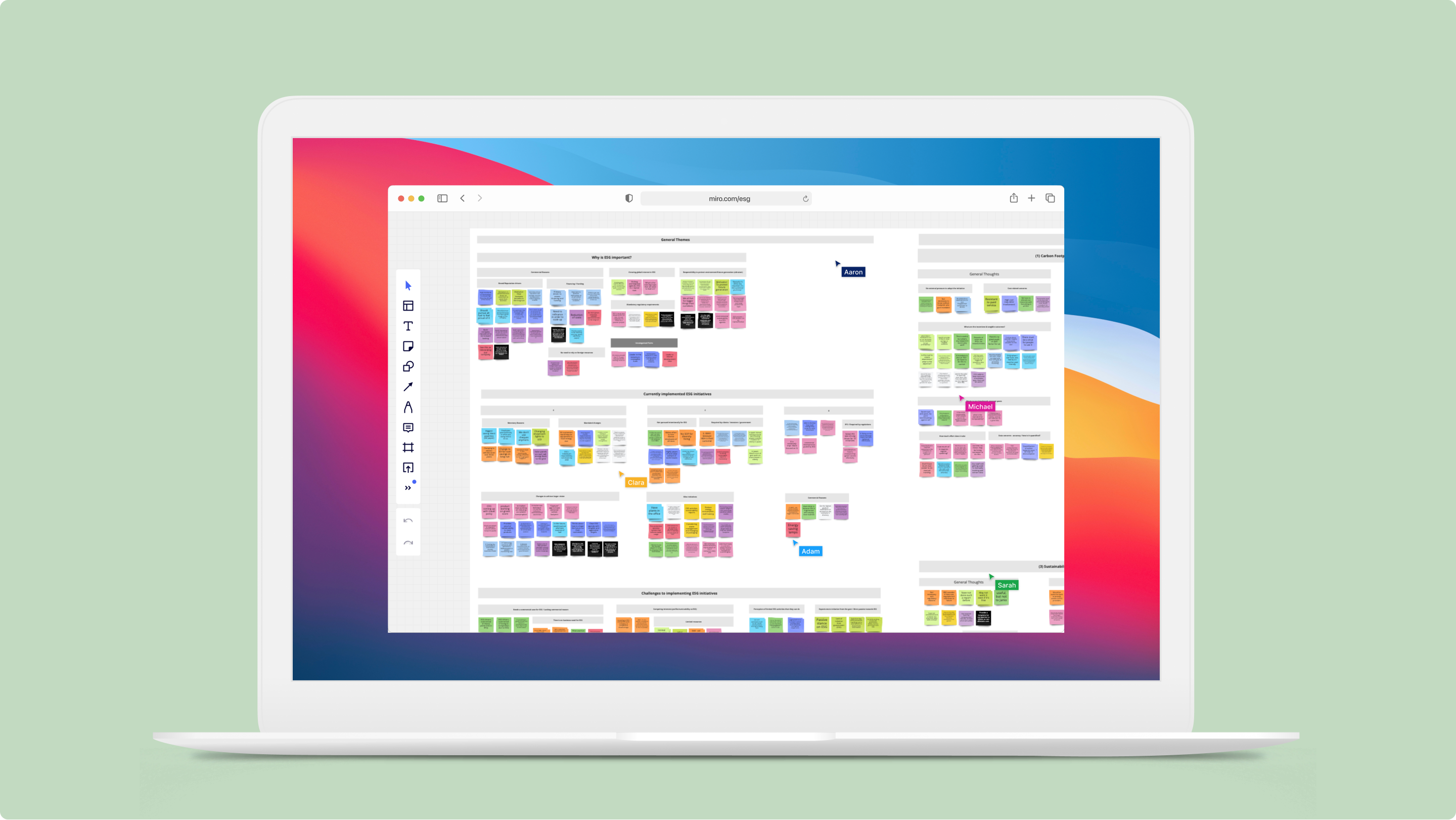
To gain insight into SMEs’ sustainability efforts, we designed both explorative and evaluative research to understand the experiences of SME decision-makers across industries and markets.
Our evaluative efforts validated our client’s potential solution concepts - SMEs showed interest and appetite for such solutions in the long-term. However, our explorative angle yielded a significant discovery - these SMEs faced critical, unmet needs, yet to be considered by our client, that hindered the initiation of their ESG journey.
SMEs interested in ESG practices fell into varying awareness and maturity levels. Their decision-makers, whether they fell into the categories of “ESG advocates” or “ESG ambivalents”, collectively faced daily challenges such as cost, cash flow and resource constraints. ESG was ultimately regarded to be in conflict with profitability, creating an aspiration-execution gap.
As SMEs struggled with getting access to the right advisors, resources and tools for ESG adoption, a clear opportunity emerged for our client to play the role of trusted advisor and partner. Working closely with our client, we co-created additional propositions that both solved for SMEs’ unmet needs and integrated seamlessly into the bank’s existing offerings.
We fleshed out a strategic roadmap to guide our client forward with their next step: building a Minimum Viable Product (MVP) that meets SME needs. Within the roadmap, we outlined the foundational requirements they needed to support SMEs on, before ESG solutions would prove viable.
Once the foundation for ESG adoption has been established, our client could then offer additional solutions to SMEs. Of their initial 11 proposed solution concepts, we prioritised those that could be seamlessly integrated into their existing platform, then highlighted the top 4 that would drive uptake of their MVP.
With thorough research into the motivations, challenges and needs of SMEs seeking to adopt ESG practices, we ensured that our client’s solution concepts had the strong foundations needed to take off. Our client’s resources could thus be strategically invested in becoming a trusted guide for SMEs hoping to make a business and planetary impact.